

Difficulty: Intermediate amateur builder | Included: Full English-language builder book with plans | Format: PDF | File Size: 1.05 MB
The aircraft that launched the homebuilt movement
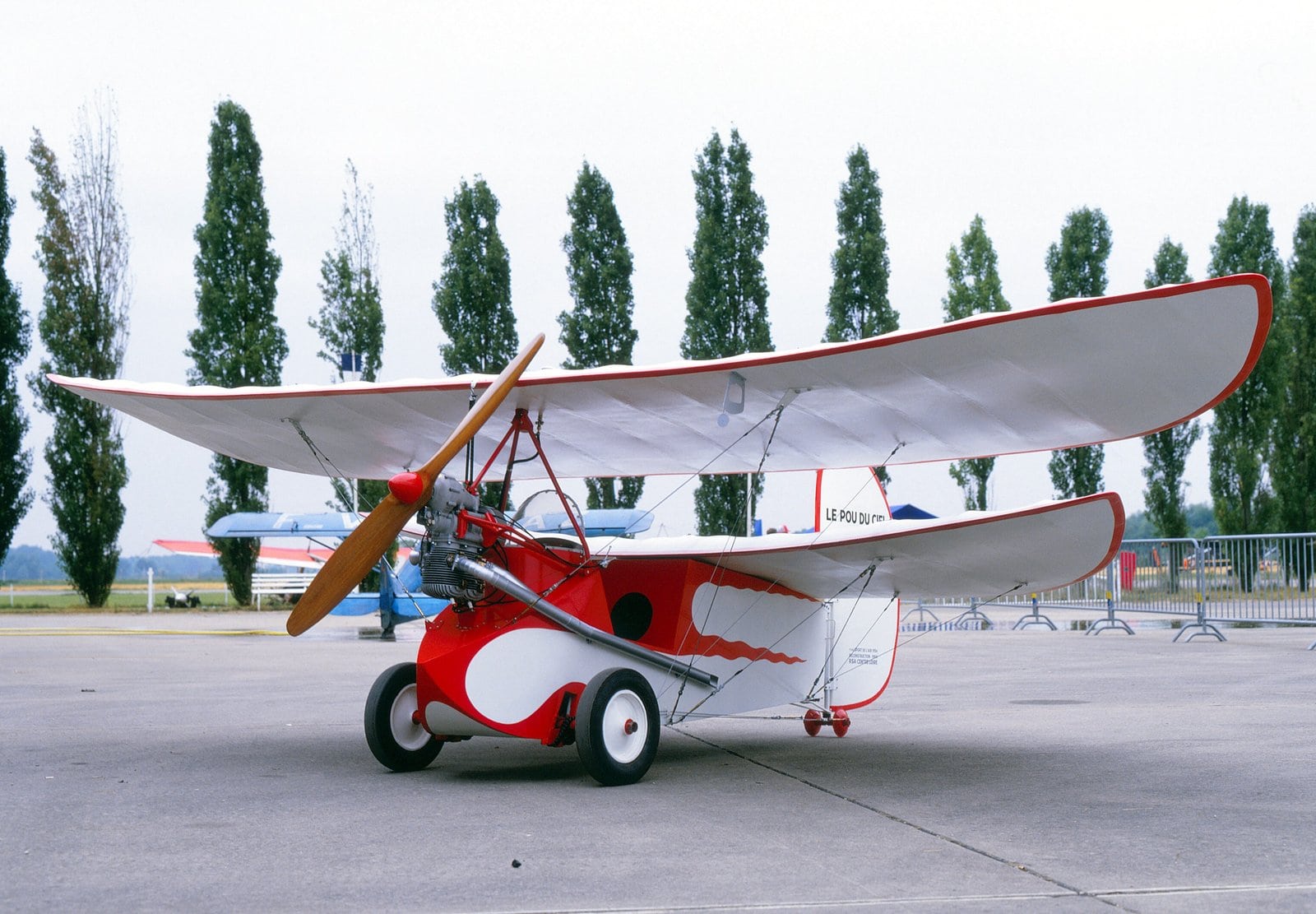
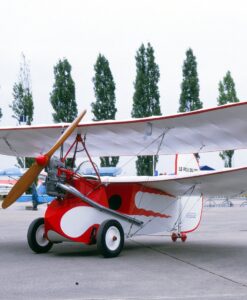
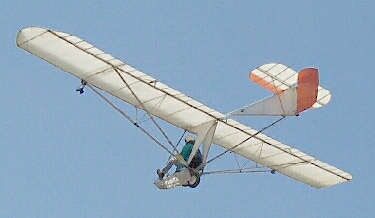
In 1933, French engineer Henri Mignet published Le Sport de l’Air and gave the world the HM.14 Pou-du-Ciel — the Flying Flea. His radical tandem-wing design used no aileron, banked on rudder input, and could be built in a garage from spruce, plywood and fabric for a few hundred dollars. Within two years, hundreds of Fleas were flying across Europe, North America and Australia. The HM.14 is, by any measure, the design that made amateur aircraft building a movement.
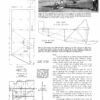
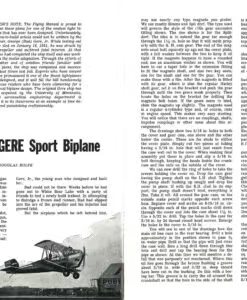
This product is the Air League of the British Empire English-language edition — "Aviation for the Amateur: The Flying Flea (Pou-du-Ciel) — How to Build and Fly It" — Mignet’s complete builder book translated for the UK and Commonwealth market. The book combines theory, design rationale, materials specifications and step-by-step plans into a single self-contained document.
Design specifications
- Configuration: Single-seat tandem-wing monoplane (no ailerons; rudder + variable-incidence front wing for control)
- Wingspan: ~22 ft (front wing) / ~18 ft (rear wing)
- Length: ~11 ft
- Empty weight: ~220–250 lb
- Powerplant: Originally Aubier-Dunne, ABC Scorpion, Carden-Ford or similar; modern builds use Volkswagen, half-VW, Rotax or two-cycle conversions (25–45 hp typical)
- Cruise: ~55 mph
- Construction: Wood spar & rib, fabric covered, simple welded steel undercarriage
What you get in the PDF
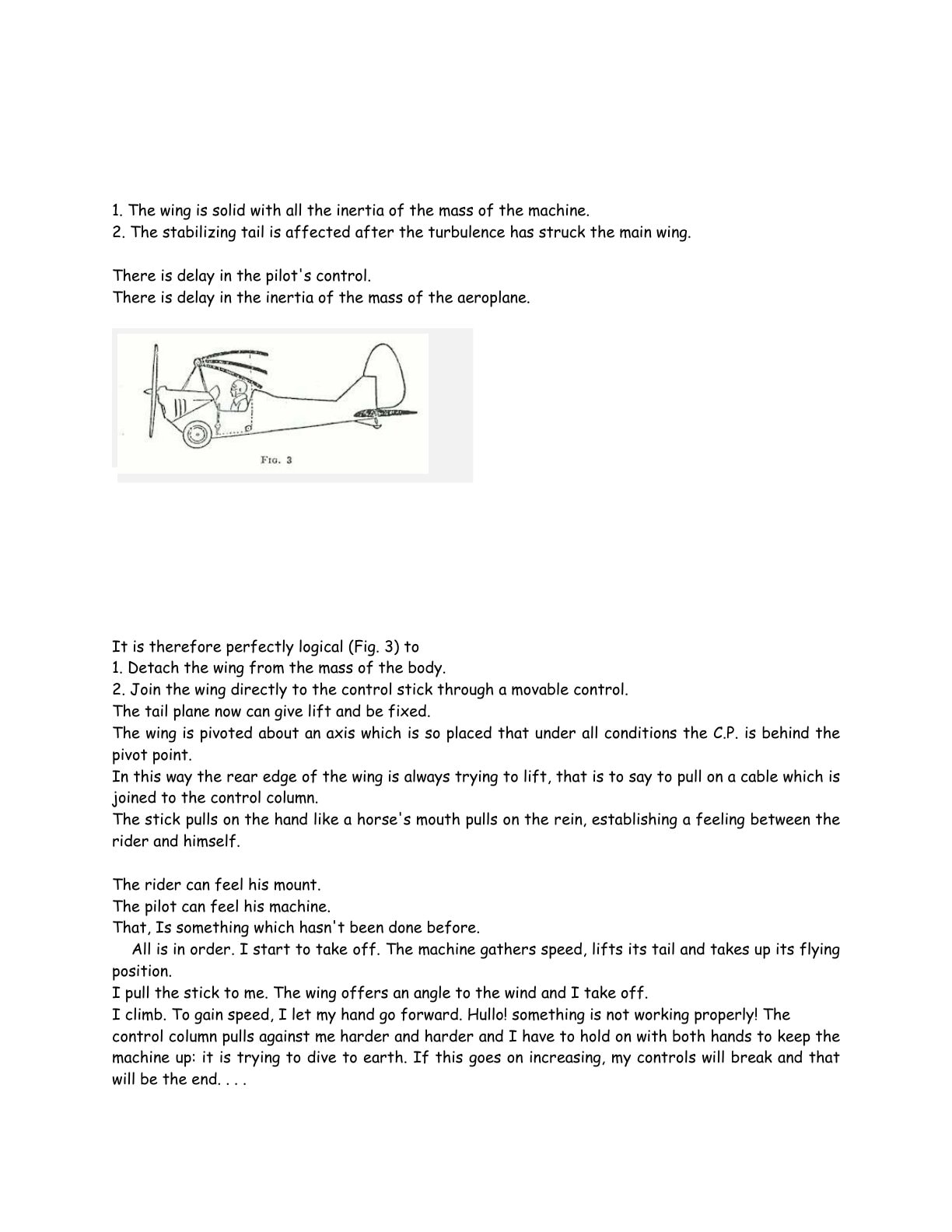
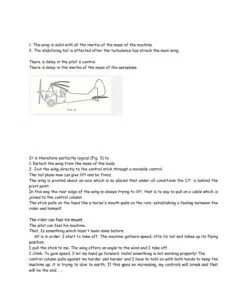
- Mignet’s full theoretical introduction — why the tandem-wing layout, how the controls work
- Materials list, timber selection, wire and fitting specifications
- Step-by-step fuselage construction, broken into discrete bays and sub-assemblies
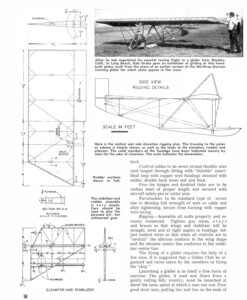
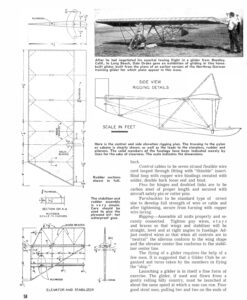
- Front and rear wing build sequences with rib templates and spar diagrams
- Undercarriage, tail group, and control linkage drawings
- Covering, doping and finishing instructions in the period idiom
- Engine installation guidance and propeller selection notes
- First-flight and pilot-handling sections written by Mignet himself
Who this is for
The Flying Flea is a serious commitment, not a weekend toy. It is suited to amateur builders with basic woodworking and fabric-covering experience who want a low-cost, low-power, low-and-slow single-seater with genuine historical credentials. Modern builders typically modify the original 1933 design with later Mignet revisions (post-1936 stability corrections), an updated engine and improved control rigging — the original book remains the canonical reference for the airframe itself.
About this document
The Air League English-edition Flying Flea book has been openly shared by the Mignet family and the homebuilt community for decades and circulates freely on the Internet Archive. The underlying 1933/34 publication is well past current copyright duration in its country of origin. Plansforu.com supplies this scan as a builder reference document for personal study and amateur construction projects. Always verify modern airworthiness requirements with your national aviation authority (LAA, EAA, FFPLUM, etc.) before flying any homebuilt design.
Related plans on PlansForU
| Format | Downloadable PDF |
|---|---|
| Delivery | Instant Download |
| Plan Type | Aircraft Plans |
Only logged in customers who have purchased this product may leave a review.
Related products

Aircraft Plans
Aircraft Plans


Aircraft Plans
Aircraft Plans

Aircraft Plans
Aircraft Plans
Reviews
There are no reviews yet.